
Finding Satoshi and the Cost of Money You Don't Control
What does it cost a person, in well-being terms, to live inside a money system they do not control?
You open the savings statement. The number is the same as last year. The price of groceries, rent, and gas is not.
That gap, between what your money says and what it does, is the sensation most monetary writing leaves out. Charts call it inflation. Felt from inside a household, it is something quieter: the ground keeps moving while the floor stays still.
This is not an investment essay. It is a wellness essay that happens to be about money. The question it asks is the one that rarely gets asked in either field directly: what does it cost a person, in well-being terms, to live inside a money system they do not control?
“Inflation is not just an economic statistic. It is an attentional draw on the household.”
The hidden tax on attention
In 2013 the economists Sendhil Mullainathan and Eldar Shafir published Scarcity, a synthesis of a decade of fieldwork on what financial pressure does to cognition. Their finding, stated simply: scarcity captures attention. People living close to the edge perform worse on tests of fluid intelligence, sleep less, and lose the ability to plan past the next few days. The effect is not character. It is bandwidth.
The wellness implication is rarely drawn. Time spent worrying about money is time not spent on anything else. The cost is paid in calls not made, books not read, conversations not finished. Inflation, currency volatility, and financial surveillance all sit in the same family. They are draws on the attention budget of an ordinary household.
The point is not that everyone is broke. It is that the cognitive load of an unstable money is paid by everyone who has to think about it, including the people who can absorb the cost. A question about money is also a question about attention, which is a question about wellness.
What Mauss saw
In 1925 the French sociologist Marcel Mauss published Essai sur le don, translated into English as The Gift. He had spent years reading ethnographies of potlatch ceremonies in the Pacific Northwest and kula exchanges in the Trobriand Islands, and he came away with a simple thesis. Exchange has never been only transaction. Every gift carries an obligation; every payment carries a relationship.
Currency, in Mauss's reading, is a record of accumulated trust. It is the institutional memory of a community that a thing can be given today and recovered tomorrow. When the unit of account is stable, the relational ledger is stable, and people give freely. When it is not, the ledger wobbles. Hoarding, hedging, deferral, and suspicion follow.
This is not abstract. It is what happens at the kitchen table when a couple stops talking about a planned move because no one is sure what next year's rent will be. It is what happens when a small business owner stops hiring because she can no longer forecast a year. The question of monetary stability is a relational question by another name.
The cypherpunk question, in plain English
A word worth defining. Cypherpunk is a portmanteau of cipher (the cryptographic kind) and cyberpunk (the literary kind). It names a loose group of cryptographers, programmers, and privacy activists who began meeting and emailing each other in the late 1980s and early 1990s, asking what would happen if ordinary people had access to the same encryption tools that governments and banks did.
Their formal question was technical. Their underlying question was wellness-shaped: what would it cost me, as a person, if my private exchanges were no longer private and my savings were no longer mine to control? Their answer was cryptography, applied to communication first and to money second.
Several proposals followed. David Chaum's DigiCash, in 1990, was the first practical electronic cash. Adam Back's Hashcash, in 1997, proposed the proof-of-work mechanism that would later anchor Bitcoin. Wei Dai's b-money, in 1998, sketched a distributed ledger. Nick Szabo's Bit Gold, in the same period, proposed unforgeable digital scarcity. None of them, in their original form, succeeded at scale.
Bitcoin, published as a white paper in 2008 under the pseudonym Satoshi Nakamoto, drew on all of these. It is one experiment in a longer tradition. Whether it succeeds in the decades to come is an empirical question, not an article of faith. The first documentary to take the four-year question of who Satoshi was as seriously as it deserves, Finding Satoshi, treats the origin as a sincere inquiry rather than a creed. Soul Syndicate is a distribution partner for the film.
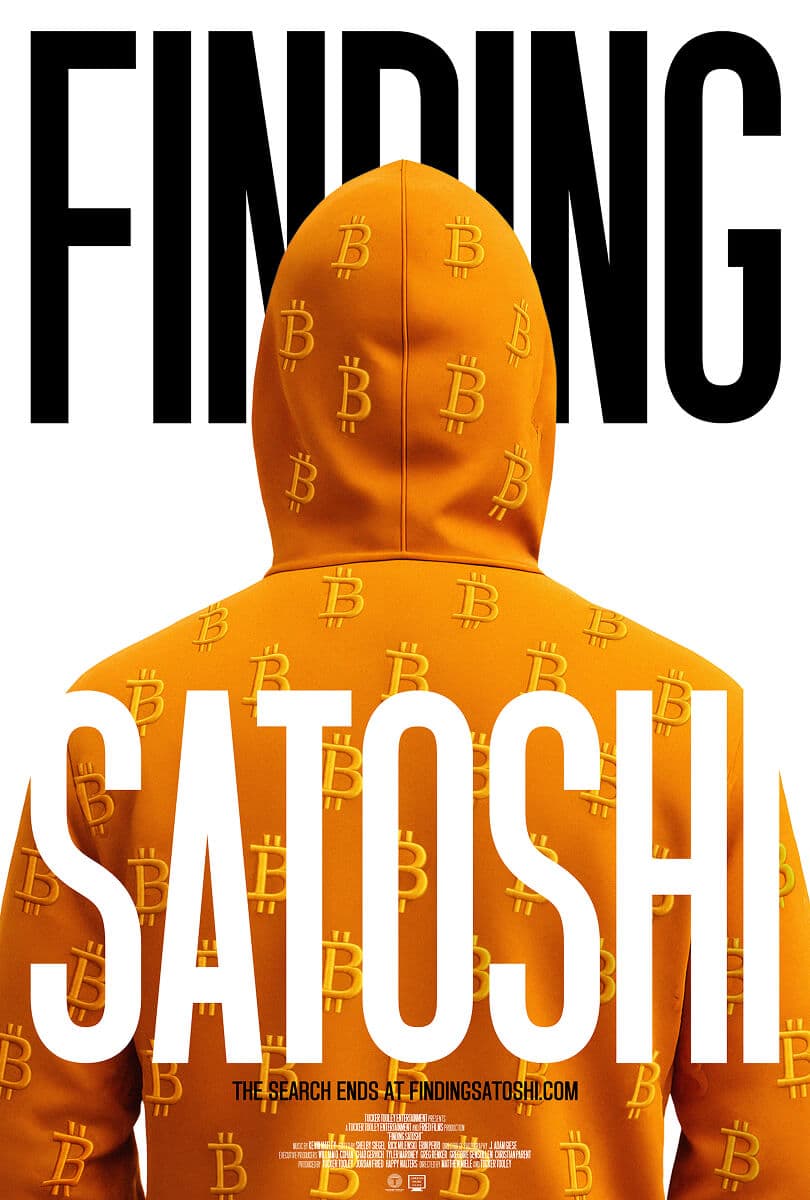
Featured Documentary
Finding Satoshi
A documentary about the most valuable mystery in modern finance, and the people who can't stop hunting it.
Watch the trailer →The other answers
Bitcoin is one experiment. It is not the only one, and most of the others predate it. The wellness question, “how do I hold value in a system I trust,” has many honest answers. A short tour.
- Personal savings discipline. Old, boring, durable. Vicki Robin and Joe Dominguez's Your Money or Your Life (1992) reframes spending as the trade of life energy and is still one of the most useful books on the subject.
- Cooperatives and credit unions. Member-owned, locally accountable financial institutions. The Mondragón Federation in the Basque Country has run as a worker-owned cooperative since 1956 and now employs roughly eighty thousand people.
- Mutual aid networks. Direct, relational, often informal. The classic reading is Peter Kropotkin's Mutual Aid (1902); the modern reading is Dean Spade's book of the same title (2020).
- Local and complementary currencies. The Bristol Pound (2012 to 2021) and BerkShares (Berkshire region of Massachusetts, 2006 to present) are two of the better-documented experiments. Time banks, where the unit of account is an hour of labor, are another.
- Public-banking and sovereign-money proposals. The Bank of North Dakota, in operation since 1919, is the United States' only state-owned bank. Public-banking campaigns continue at the state and city level.
- Bitcoin and other cryptocurrencies. A specific, technical, contested experiment. Treated here as one approach in a broader tradition rather than as a destination.
The point of the list is not to rank. It is to show that the wellness question has been asked many times, by many traditions, in many vocabularies. A reader who treats any single answer as the only answer has stopped looking.
What financial wellness actually is
Financial wellness is not net worth. It is the quality of the relationship between a person and the money systems they live inside, and like other forms of wellness, it has dimensions that can be named.
- Adequacy. Do you have enough to meet your obligations.
- Predictability. Can you plan a year out without dread.
- Agency. Do you have a meaningful say in how your labor turns into a future.
- Reciprocity. Are you in fair exchange with the people and institutions you depend on.
Money you do not control fails the agency test. Money that loses purchasing power faster than you can earn fails the predictability test. Money tied to a system that surveils every transaction fails agency in a different direction. The four dimensions are how the wellness question turns into a series of specific, answerable ones.
The Bitcoin question, stripped of tribalism, is whether a different design improves the agency-and-predictability picture for a normal person. It is a fair question. It does not have a settled answer. Neither do most of the others on the list above, which is why the experiments continue.
“Financial wellness is not net worth. It is the quality of the relationship between a person and the money systems they live inside.”
The Tuesday version
The work happens, as most wellness work does, in small, repeatable moves. None of these require a position on Bitcoin.
- Open one savings account you do not touch. Automate a small amount into it weekly. The habit matters more than the percentage.
- Read one primary source on monetary history. John Kenneth Galbraith's Money: Whence It Came, Where It Went (1975) is short, clear, and ideologically slippery in the best way.
- Audit your financial subscriptions for one hour. Cancel one. Note what changed.
- Have one honest money conversation with someone you exchange with regularly. A partner, a parent, a business partner. The relational ledger lives in language, not in spreadsheets.
None of this is investment advice. It is the practice of paying attention to the cost of a system you cannot fully change. That practice is, in the end, what financial wellness is.
The closing frame
The wellness question is older than Bitcoin and will outlast whatever happens to it. What does it cost a person to live inside a money system they do not control. The answer is not zero. The answer is also not, “buy this thing and the problem goes away.”
The honest move is to pay attention to the cost, build the habits that reduce it, and hold the experiments that try to reduce it lightly enough that you can think about them.
Watch the documentary
For the four-year investigation that sits behind one of the experiments named above, the trailer and release-date signup are below.
Featured Documentary · In Presale Now
Finding Satoshi
A four-year, evidence-based investigation into the creator of Bitcoin. Featuring Michael Saylor, Joseph Lubin, Fred Ehrsam, Bill Gates, and twenty-plus crypto pioneers on camera.
Watch the trailer →Further reading
- Your Money or Your Life, Vicki Robin & Joe Dominguez (1992).
- The Gift, Marcel Mauss (1925).
- Scarcity: Why Having Too Little Means So Much, Mullainathan & Shafir (2013).
- Money: Whence It Came, Where It Went, John Kenneth Galbraith (1975).
- Mutual Aid, Dean Spade (2020).
Editorial, not financial advice. Soul Syndicate does not recommend specific assets. The documentary linked above is a paid affiliate distribution; that is the only commercial relationship in this piece.
For the dimension this work belongs to, the Financial hub holds the rest of the practice.
Financial Hub →