The practice of building healthy relationships and belonging.
Why it matters
Your relationships are among the strongest predictors of a long, healthy life. Including the one with yourself.
The Harvard Study of Adult Development has tracked two groups of men since the 1930s. When George Vaillant took over in the 1970s, he expected to find patterns around career, income, or discipline. What predicted thriving in the third act of life turned out to be simpler: the quality of the person's close relationships at 50. Robert Waldinger, who leads the study now, puts it one way most people remember: loneliness kills; connection heals. The finding has held for eighty years.
This is the strongest longitudinal finding in adult development research. Stronger than income, stronger than IQ, stronger than the things we typically associate with health, the quality of a person's close relationships keeps showing up at the top of the list. And the first of those relationships, the template for all the others, is the one a person has with themselves. It is the most consistent relationship in any life, and the one every other gets practiced against. This hub starts there and works outward.
The evidence on the loneliness side is stark. The U.S. Surgeon General named it a public-health concern in 2023; Julianne Holt-Lunstad's meta-analyses put the mortality risk of chronic isolation at roughly the level of smoking fifteen cigarettes a day. Kristin Neff's decades of self-compassion research show that how people treat themselves under stress predicts mental-health outcomes more reliably than self-esteem does. Relationship quality is measurable, modifiable, and woven through nearly everything else clinical research tracks, shaping it and shaped by it in turn.
Most of what makes a close relationship hold or fall apart sits in three skills the research keeps confirming: attachment (your internal model of what to expect from another person), repair (the capacity to come back from a rupture), and conflict skill (handling disagreement without destroying what you have built). Each is more trainable than personality match. Bowlby, Ainsworth, and Gottman have spent careers documenting them. None of them get taught in school.
A fourth thread runs underneath the other three: reciprocity. It is the slow ledger that says I gave, you gave, no one keeps exact score. Over a lifetime, the balance still tracks. The opposite of loneliness is not contact. It is belonging. And the opposite of transactional contact is reciprocity that no spreadsheet captures. These are not soft values. They are the structure beneath everything else relational research measures.
The modern environment optimizes for individual performance and digital stimulation, and relational skill atrophies under those conditions. People care; the surrounding conditions do not support the care. Less practice, less time, less cultural infrastructure for it. Soul Syndicate covers relational wellness across several scales: with yourself (the template), with close others (partners, family, close friendship), with the small group (community, congregation, crew, and the mutual aid that gets built when institutions fall short), with the civic (neighborhood, city, society, and the civic participation that maintains them), and with what is larger than any of these (the natural world, tradition, the sacred). Each scale builds with use and atrophies without it.
Relational well-being is skill, not personality, closer to a thing you practice than a thing you are born with. The work scales: from a phone call you keep meaning to make, to multi-year repair on attachment patterns. None of it is a bypass for the harder work of being known.
Concepts
Relationship with yourself
The most consistent relationship in your life, and the template for most of the others. Self-compassion research (Kristin Neff) consistently shows it predicts mental-health outcomes better than self-esteem does. Attachment theory names this directly: how you relate to yourself shapes how you relate to close others, and vice versa. Work like Internal Family Systems (IFS) treats the self as a community worth hosting kindly. Not narcissism, not self-optimization; the steady practice of being reasonably honest, patient, and on your own side.
Mutual aid and reciprocal community
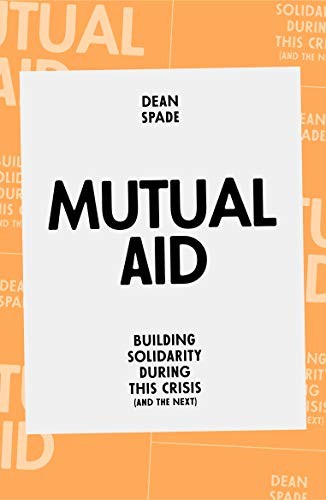
Horizontal, peer-based community support, distinct from charity or state welfare. The infrastructure that gets built when institutions fall short. Kropotkin's "Mutual Aid" (1902) argued that reciprocal cooperation is a factor of evolution, not an exception to it; Dean Spade's "Mutual Aid" (2020) is the contemporary organizing manual, written during the COVID revival. Social capital in active practice rather than measurement.
Relational quality
Not "number of connections" but depth, trust, reliability, and repair. The Harvard Adult Development Study found relationship quality at 50 a stronger predictor of health at 80 than cholesterol. Depth and time with a few are more protective than breadth with many.
Attachment
Your internal model of what you can expect from close others, largely shaped early but modifiable across life. Secure attachment correlates with better mental and physical health and conflict resolution across every age studied. Attachment work in therapy, or with a secure partner, can reshape patterns that once felt fixed.
Repair
The capacity to come back from a rupture. Research on marriages and parent-child relationships consistently shows repair matters more than the absence of conflict. The ability to say "that was on me" or "let me try that again" predicts long-term outcomes better than personality match.
Reciprocity and balance
Every close relationship maintains an implicit ledger across time, money, attention, emotional labor, repair, and care. Adam Grant's research on givers and takers, and Marcel Mauss's anthropology of gift and obligation, converge: sustained imbalance is the slow corrosion under most relationship breakdowns. The healthy version is a felt sense of rough mutuality over months and years, not a scoreboard. Naming the ledger is the first move.
Belonging
The felt sense of being part of something larger than the nuclear or dyadic unit. Loneliness research distinguishes isolation (physical) from loneliness (felt); it's the felt version that predicts mortality, and the body registers it as threat. Chronic loneliness raises inflammatory markers and is associated with cognitive decline. Community, faith, work groups, chosen family, or a felt relationship with the natural world or what is larger than the self, all count. The question is whether you feel held.
Social capital and civic participation
The networks, norms, and active practices that let communities act collectively. Robert Putnam's work connects eroding social capital to measurable drops in trust, health, and democratic function. Civic participation, voting, local government, neighborhood boards, organizing, volunteering in public life, is social capital in practice rather than theory; the research is consistent that regular participation predicts higher life satisfaction and lower depression, with the causal arrow running both ways. Individual well-being sits inside community well-being, and the work of collective self-governance is part of how it gets maintained.
Conflict skill
The ability to handle disagreement without destroying the relationship. Gottman's research identifies specific patterns (contempt, stonewalling, defensiveness) that predict relationship failure, and specific repair moves that prevent it. Learnable and durable when practiced.
Practices
Practice
One honest check-in per week with someone who matters
Relational maintenance
Not a text. A call or a meal. Pick the relationship, put it on the calendar, don't cancel on it. The frequency and form matter less than the durability.
Practice
Repair one small rupture this month
Gottman · repair attempts
The thing you didn't say the right way. The apology that's a week late. Repair is a skill, and it gets better with reps. Short, specific, no hedging: "I was off last Tuesday. I'm sorry."
Practice
Speak to yourself the way you would speak to a close friend
Neff · self-compassion research
Kristin Neff's research shows the internal voice of a reasonably kind friend does more for long-term mental health than the voice of a stern coach. Catching the harsh internal tone and deliberately softening it is a practice, not a personality trait.
Practice
Show up for community in person once a week
Putnam · Bowling Alone
Congregation, sports league, volunteer shift, book club. Regular, in person, same people. Putnam's social-capital work shows recurring face-to-face contact predicts both well-being and community health. One standing commitment is worth twenty irregular ones.
Practice
Know three of your neighbors by name
Neighborhood social capital
The research on neighborhood-scale social capital is specific and strong. Knowing three neighbors by name predicts informal mutual aid and broader civic participation. Introduce yourself the next time you see someone on your block.
Practice
A weekly conversation you look forward to
Standing connection
With a friend, a partner, a family member. Protected time, no phones, no agenda. Same time, same place, every week. The standing nature is the practice.
Practice
Name one person you would call, and one who would call you
Mutual-aid test
The shortest test of whether mutual aid already exists in your life, and where it does not. If the lists are short, the question is whether you have been building that reciprocity or waiting for an institution to provide it. Write the names; pick one relationship to invest in this week.
Practice
Show up once a quarter for a civic thing you care about
Civic participation
Voting is baseline; showing up matters more. A school-board meeting, a local-government hearing, a volunteer shift at a community org. Regular civic participation predicts both individual well-being and community health.
Russian naturalist arguing, against the competitive reading of Darwin in his time, that cooperation is as important a factor of evolution as competition. Foundational to the mutual-aid lineage.
U. Texas Austin, Self-compassion research (2003 onward)
The founding empirical program on self-compassion. Repeatedly finds that how people treat themselves under stress predicts mental-health outcomes better than self-esteem does, and that self-compassion is a trainable skill with measurable downstream effects.
2020
Spade, D.
Mutual Aid: Building Solidarity During This Crisis (and the Next)
The contemporary organizing manual on mutual aid, written from the practical revival during the COVID-19 pandemic. Draws a clean line between charity (vertical, dependency-producing) and mutual aid (horizontal, solidarity-producing).
Modern marriages are asked to provide far more than historical marriages ever were. A useful frame for why long-term relationships feel harder than they should.
Decades of observational research on couples, identifying patterns (the 'Four Horsemen', repair attempts) that predict relationship outcomes with high accuracy.