The Bitcoin Documentary That Refused to Settle. Then This Happened.
One of the biggest unresolved financial stories of the modern era has gone nearly two decades with serious but scattered reporting. A small independent documentary just spent four years on it, revising its own working hypothesis multiple times and refusing to settle on an answer until the evidence held.
An anonymous founder. A mystery with enough interview subjects, document trails, and on-chain evidence to fuel years of serious journalism. Close to two decades since Bitcoin went live.
Major outlets have published serious Satoshi reporting in that window. Newsweek ran the Dorian Nakamoto story in 2014. Wired and Gizmodo ran parallel reporting on Craig Wright. The New York Times, Bloomberg, and The Economist have all produced substantive pieces at various points. Those were real assignments taken on by real reporters.
Number of those pieces that reached a conclusion the crypto community broadly accepted: none.
Serious. Substantive. Still unresolved.
A small independent documentary crew did something different. They spent four years on it, and what separates their work from what came before is not the ambition, plenty of reporters have aimed to identify Satoshi, but the methodology.
They sat down with Michael Saylor, Joseph Lubin, Fred Ehrsam, Bill Gates, and more than twenty of the early Bitcoin developers, on-chain investigators, and forensic researchers who were actually there. They tracked primary sources across three continents. And critically, they thought they had the answer more than once along the way. Every time, the evidence broke the working hypothesis. Every time, they kept digging instead of forcing it.
Then, at the end of four years, the evidence finally held. They reached a conclusion.
It's called Finding Satoshi. It is the kind of evidence-led, willing-to-be-wrong investigation the daily- finance model has never structurally supported.
"A small independent film crew did something none of the prior reporting managed: stayed evidence-led long enough to be wrong about the answer multiple times, and disciplined enough to keep going until the evidence held."
Why the daily-finance model makes this hard
We want to be clear about the thing we're saying here, because it's the kind of observation that usually gets flattened into a conspiracy theory the second it leaves the room.
There is no conspiracy. A conspiracy would require coordination. This is the opposite: a quiet, uncoordinated structural pattern that makes the kind of evidence-led, willing-to-be-wrong work Finding Satoshi required genuinely hard inside a modern finance newsroom. Serious Satoshi stories have always been possible. A four-year runway with no guaranteed deliverable, and the mandate to throw out working hypotheses every time the evidence breaks them, is a different shape of assignment.
Financial journalism, as a commercial product, is optimized for daily market coverage. Earnings previews. Price features. CEO interviews. Explainers. These are the things that run on a reliable schedule, pay the lights, and don't require a three-year runway. Longform investigative work is the opposite shape, slow, expensive, legally risky, frequently unpublishable. Every major finance desk in the world has quietly cut the size of its longform team in favor of the reliable daily product.
Against that backdrop, an evidence-led four-year Satoshi investigation is a hard assignment to fund. No guaranteed interview. No guaranteed outcome. Massive legal exposure if you name the wrong living person. The story would eat a reporter's entire year and might produce nothing publishable at the end. Nobody needs to say any of this out loud for that specific shape of assignment to be rare. It just is. So we get Satoshi reporting at the shorter runway: strong pieces, earnestly tried, without the room to keep digging for another year when the current working hypothesis breaks.
A feature documentary crew plays by different rules. Four-year timelines are normal. Self-funding is normal. The editorial structure isn't tied to advertising from the industry being covered. What is genuinely hard to fund inside a finance desk is routine inside a documentary production.
That's how one of the biggest unresolved financial stories of the modern era ended up getting told, through four years of evidence-led work, by a small film crew and not by any of the finance-desk outlets that could have funded it.
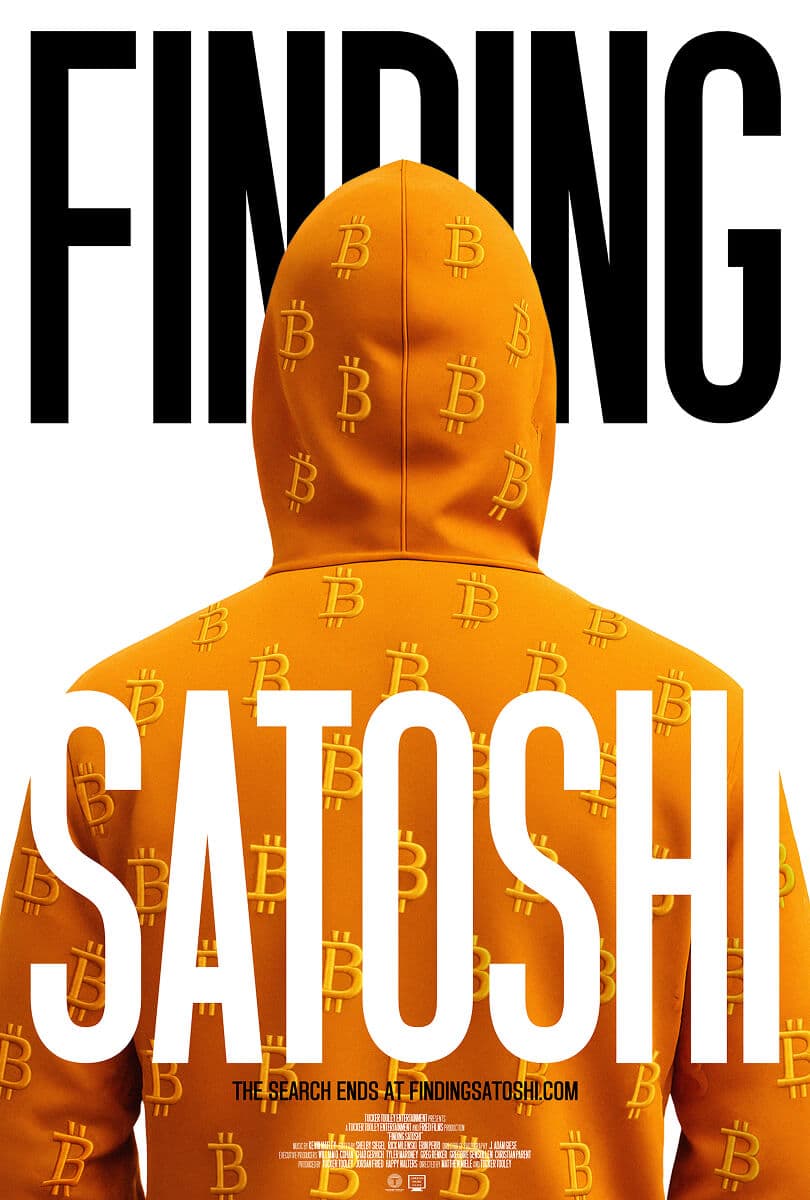
Featured Documentary
Finding Satoshi
A documentary about the most valuable mystery in modern finance, and the people who can't stop hunting it.
Watch the trailer →What the film does that nothing else has
Finding Satoshi does five things no other piece of coverage on this subject has done:
- → It got the interviews. Saylor, Lubin, Ehrsam, Gates, plus twenty-plus primary sources , more depth of on-camera Satoshi discussion, assembled in a single work, than any finance-desk outlet has produced on the subject to date.
- → It did the forensics. On-chain analysis of the early wallets. Stylometric examination of the known writing samples. Timestamp reconstruction. The kind of evidence work that requires patience and expertise and time.
- → It tells the cultural story. The 1993 cypherpunk manifesto, the mailing list, the incremental papers. Not as a footnote, as the actual origin.
- → It reaches a conclusion. Four years of investigation landing in a specific, defended, on-camera answer.
- → It doesn't turn Bitcoin into a price chart. The word "bull market" is, as far as we can tell, used exactly zero times.
If any of this is landing, the trailer and the presale signup are here. Clear ninety-two minutes for this one. It's worth the clear.
Our prediction
A carefully hedged prediction: Finding Satoshi stands to become one of the most-cited primary-source Bitcoin films on the identity question, because no other single work has combined this interview roster, this timeline depth, and this willingness to land on a defended conclusion.
The major finance desks that have produced Satoshi coverage over the last decade will, predictably, write about this film. They will analyze its conclusion. They will interview the filmmakers. And every one of those pieces will be transparently downstream of a ninety-two-minute independent documentary that did the thing the daily-finance model makes genuinely hard: four years of evidence-led field work, disciplined enough to be wrong about its own working hypothesis multiple times, and to keep going until the evidence finally held.
The people who watch the film early will be the people who get to frame the conversation that comes after it. The people who wait will be reading other people's takes on what it said.
You probably want to be in the first group.
Frequently Asked
What makes Finding Satoshi different from the usual Bitcoin coverage?+
Haven't the big finance outlets covered this already?+
Who's in the documentary?+
Does the film actually reach a conclusion?+
How do I watch it?+
Watch the film
Trailer, filmmakers' note, and release-date signup on the documentary's official page.
Featured Documentary · In Presale Now
Finding Satoshi
A four-year, evidence-based investigation into the creator of Bitcoin. Featuring Michael Saylor, Joseph Lubin, Fred Ehrsam, Bill Gates, and twenty-plus crypto pioneers on camera.
Watch the trailer →Related reads
Affiliate disclosure. Soul Syndicate is reader-supported. Some links in this article are affiliate links, when you click through and make a purchase, we may earn a small commission at no additional cost to you. We are not paid to write content, and affiliate relationships never influence our editorial perspective. Nothing in this article is financial, investment, tax, or legal advice. References to Bitcoin, cryptocurrency markets, or the value of crypto assets are provided as cultural context, not recommendations. Cryptocurrency investments can lose value, including their entire value.
This article contains editorial observation about newsroom resourcing for long-runway, evidence-led investigative work. Satoshi’s identity has been the subject of serious reporting at numerous major outlets, including Newsweek, the New York Times, Bloomberg, The Economist, Wired, and Gizmodo. None of that reporting produced a conclusion the crypto community broadly accepted. Our observation is specifically about the methodology Finding Satoshi demonstrates, four years of evidence-led field work, willing to revise its own working hypothesis multiple times, and not an assertion that other outlets weren’t serious or weren’t trying.
Nothing in this article identifies, or implies the identification of, any specific individual as Satoshi Nakamoto. Soul Syndicate takes no position on the identity of the Bitcoin creator.
© 2026 Soul Syndicate. All rights reserved.