
The Missing Pillar of Longevity Is How You Move Through a Day
The longevity conversation has perfected the metabolism. It has almost nothing to say about whether your body feels good to live in, at thirty or at eighty. The stiffness, the aches, and the pain most people already carry sit right inside that gap.
Listen to podcast style conversation(20 min)
Audio generated with Google NotebookLM.
There is a moment that arrives for a lot of people, and not only the old ones. You sit down on the floor, and when you go to stand back up a hand reaches for the table without being asked.
Or you turn to check a blind spot and your neck stops short, so your whole torso swings around to finish the job. Maybe it is sharper than that: a low back that locks on a Tuesday, a shoulder that has quietly stopped reaching the top shelf, a hip that aches after an hour at the desk. None of it is an emergency. You are, by every number that longevity culture cares about, fine. The body has just started negotiating with the world on slightly worse terms than it used to.
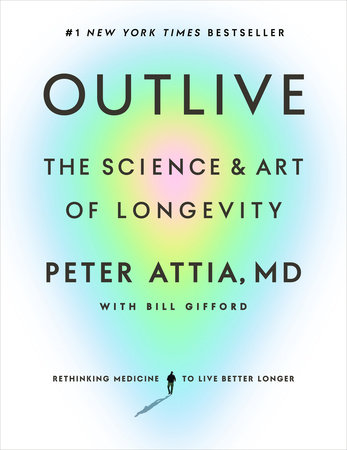
We have spent a decade getting very good at measuring the parts of aging you cannot feel. Continuous glucose monitors, twice-yearly blood panels, sleep scores down to the minute. Peter Attia’s Outlive made the case, persuasively, that the chronic diseases of aging should be treated decades early. It is the most rigorous popular synthesis we have of living longer. But almost all of it lives below the skin, in variables you optimize rather than experiences you have.
“Lifespan is being solved in the bloodstream. The body you actually live in barely gets mentioned.”
The pillar nobody measures
There is another pillar of aging well that gets a fraction of the attention, and you feel it every single day: how you actually move through one. Whether you can squat, hinge, reach, twist, and carry without the small daily negotiations adding up. Call it movement quality. It is the difference between a body that merely survives into old age and one that still feels like home when it gets there.
And it is not a someday problem. The locked back, the cranky knee, the neck that will not turn, these show up in people at thirty and forty, years before any clinic gives them a name. The same daily mechanics that protect a body into its eighties also resolve a great deal of the everyday pain and discomfort people are carrying right now. The longevity framing and the pain-relief framing are two views of the same work.
Why this is a wellness variable, not a fitness one
It is tempting to file this under fitness and move on. Lift heavier, stretch more, problem solved. But movement quality sits upstream of things most people would never connect to it. A hip that has quietly lost its rotation changes how you walk, which changes how your lower back absorbs load, which is why a sudden back spasm at fifty was usually ten years in the making.
Posture that collapses forward over a desk all day does not just look tired; it compresses the breath, and shallow breathing keeps the nervous system in a low idle of alertness you stop noticing because it never switches off. The stiffness and the bad sleep and the short fuse are not separate complaints. They are the same body, talking.
So the real question is not how do I fix my shoulder. It is what kind of life does this body still say yes to, and how do I keep that answer wide for as long as possible. That is a question about causes, not symptoms.
The model that runs out
For most of the last half-century, the body has been something you took in to get fixed when it broke. You feel pain, you find a clinician, they diagnose the part, they treat the part, you leave. It is a model built around injury and episode. For an acute injury, it works.
What it does not do is tend the body across the long quiet stretches when nothing is technically wrong but everything is slowly tightening. It has nothing to say about the other three hundred and sixty days. It indexes on the broken part rather than the whole pattern, and it ends the conversation the moment the pain does. For a variable that decays over decades, an approach that only switches on at the moment of failure is the wrong shape.
The model replacing it
A different approach has been quietly taking root, and the cleanest way to describe it borrows a word from software: prehab, not rehab. Instead of waiting for the break, you assess how a body actually moves, find the compensations before they cost anything, and build a practice around keeping range, strength, and ease through the years.
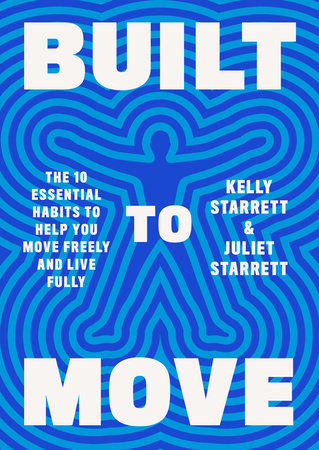
Some of the most accessible versions live on your phone, and they are genuinely good. The Ready State, built by the physiotherapist Kelly Starrett, offers more than a thousand prescriptive mobility routines tied to specific joints. GOWOD opens with a mobility assessment and hands you a daily flow from your own scores. Hinge Health goes further toward the clinic, pairing licensed physical therapists with coaches and camera-based form feedback, delivered remotely, with published outcomes behind it.
These are good tools. The honest limit is that each is a tool, singular. A video library is not a pair of hands that can feel where a joint is actually stuck. A daily mobility score is not a person watching how you compensate in real time. A remote program built for scale has scale as both its strength and its ceiling. Each solves one slice of movement quality cleanly. None of them is the whole web.
What the whole web looks like
It helps to look at a practice trying to build the entire thing rather than a single slice of it. Myodetox is the clearest example currently operating at scale, with studios across Toronto, Vancouver, Calgary, Los Angeles, and New York. Its founders describe the problem in almost the same terms as the longevity researchers, just aimed at a different system: “So much of physical therapy today is reactive. You go get treatment when you have pain. We want to change that mindset. Do it proactively so you don’t have pain.”
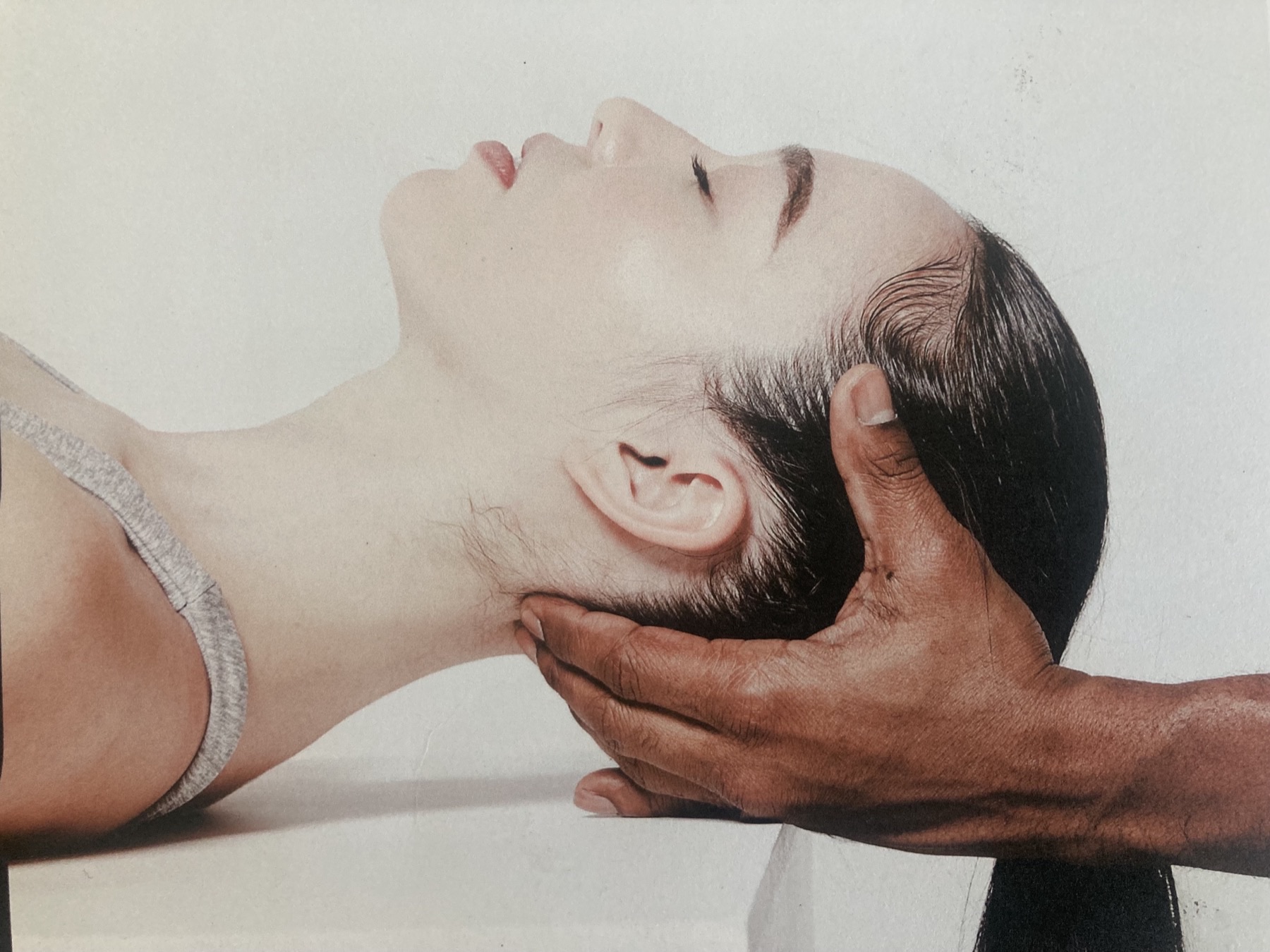
The structure follows from that ethos. A first visit is a whole-body assessment, not a triage of the part that hurts, on the assumption that daily habits and old injuries shaped your movement patterns long before anything started to ache. Physical therapists, chiropractors, and massage therapists work under one roof, so the hands-on side (myofascial release, joint mobilization) and the active side (mobility and strength built into exercises that make a new pattern stick) are not three appointments in three buildings. The plan runs through pain relief, postural alignment, better movement, strength that prevents the next injury, and finally movement built around the specific life you actually lead. The spaces are designed to feel like somewhere you would choose to return, which matters more than it sounds, because the whole premise depends on coming back before anything is wrong.
You can argue about any single piece, and a good app will beat a mediocre clinic on the thing the app does. The point is the shape. Movement quality decays as a pattern across a whole body over a whole life, so the approaches most likely to protect it are built as an ongoing relationship rather than a one-time fix or a single feature.
Soul Syndicate has no commercial relationship with Myodetox. We point to them here as a clear example of where the field is heading.
What you can do this week
None of this requires a subscription to begin. Three starting points, all free, all yours.
- Get off the floor. Sit down and stand back up once a day, using as little assistance as you honestly can. It is a movement assessment disguised as nothing, and it will tell you more about your trajectory than most wearables.
- Break up your sitting. Every hour at a desk, stand, reach overhead, and rotate gently each direction. The body holds the shape you give it most often; give it more than one.
- Spend five minutes on the thing you already know about. The stiff hip, the locked neck, the shoulder that will not reach. Ranges respond to attention faster than almost anything else in the body.
And when the self-directed work stops being enough, which for most people it eventually does, that is the signal to find the next layer: a practice or program that can see what you cannot, put hands where a video cannot reach, and keep the conversation going across the decades rather than ending it the moment the pain does. We weighed the four named here, the three apps and Myodetox, side by side in our guide to prehab physiotherapy.
Read deeper

The closing frame
The longevity you can measure in a blood panel matters. So does the kind you feel every time you stand up off the floor without thinking about it, every morning your back does not announce itself, every reach that simply happens. They are the same project. We have just been keeping score on only half of it.
A body that feels good to live in is not a luxury you earn at the end. It is the practice that gets you there.
Wellness research, the science of the body, and the practices behind a life that feels good to live in, straight to your inbox.
Frequently asked
What is movement quality?+
Is this only for older adults, or does it help with pain at any age?+
Is movement-quality work the same as physical therapy?+
How do I start improving my movement quality at home?+
Further reading
- Best Prehab Physiotherapy, 2026, our guide weighing all four of these services side by side.
- Myodetox, modern assessment-first physical therapy (the worked example above).
- The Ready State, Kelly Starrett’s prescriptive mobility library.
- GOWOD, mobility assessment and a daily flow scored to your body.
- Hinge Health, digital musculoskeletal care with licensed physical therapists.
For the dimension this work belongs to, the Physical hub holds the rest of the practice.
Physical Hub →