
The Practice of Contrast
Heat, cold, and the nervous system in between.
Snow falling on cedar. Steam coming off the tub at the back of the courtyard. Whistler in February. You walk past men and women who have been here for hours, in robes, slow.
The first cold plunge is twenty seconds. The sound that comes out of your chest belongs to your nervous system, not you. Then the heat again, the sauna with the steam clean off the rocks, sitting still while the body learns the lesson it was just taught. By the third or fourth cycle something shifts. You are not enduring anymore. You are listening.
What the body learns from contrast is not a single benefit. It is a vocabulary. Heat opens; cold closes; alternating between them teaches the nervous system a kind of steadiness the steady state cannot.
“You are not enduring anymore. You are listening.”
Where the practice came from
The Finnish sauna has been at the center of household life for two thousand years. Birth, work, illness, and death all happened in or near the sauna. The post-sauna plunge into a frozen lake or a snowbank was ritual, not stunt. The practice has its own vocabulary: löyly is the breath of steam when water hits hot stone, and a Finn will tell you whether a sauna's löyly is good or bad the way a French winemaker talks about a vintage.
The practice traveled. Russian banya with birch-branch vihta. Korean jjimjilbang with multiple temperature rooms. Japanese onsen with cold rinse between hot soaks. Turkish hammam with cooling marble. Across cultures that had nothing else in common, contrast bathing kept showing up because it kept working.
The modern Western version, with the seven-thousand-dollar cold plunge and the cardiologist on a podcast, is the latest expression of an old idea, not the invention of one.
What the body actually does
Heat. Vasodilation. Heat shock proteins. A cardiovascular load similar in some respects to moderate exercise. Jari Laukkanen and colleagues at the University of Eastern Finland, in a 2015 paper in the JAMA Internal Medicine, followed 2,300 middle-aged Finnish men for two decades. Frequent sauna bathers (four to seven sessions per week) showed dose-dependent reductions in cardiovascular mortality, all-cause mortality, and later studies extended the finding to dementia risk. The effect sizes are large enough to be hard to ignore. Caveat: the evidence is epidemiological, not causal. Sauna habit correlates with a healthier baseline lifestyle. The case is strong; not airtight.
Cold. Vasoconstriction, then a rebound dilation when you return to warmth. Sympathetic nervous system activation. A norepinephrine spike (Søberg et al., Cell Reports Medicine, 2021) at two to four times resting baseline, sustained more than thirty minutes after exit. Brown adipose tissue activation, with metabolic effects that are modest but real. Mood effects are larger and more consistent than the metabolic ones. Cold immersion reliably moves people toward calm and awake, which is not nothing.
Contrast specifically. Vascular flushing. Lymphatic mobilization. Autonomic flexibility, the trained capacity to move between sympathetic and parasympathetic states without getting stuck. The hypothesis underneath, plain: most modern nervous systems are stuck mildly sympathetic. Contrast practice trains the recovery side.
The cold we avoid
Years of avoiding cold water, the shower handle easing a degree warmer every time. The story you tell yourself (I run cold, I do not tolerate it, I am a hot-shower person) becomes the limit it describes.
What changes is small. Thirty seconds of cold at the end of a hot shower. Then a minute. The body learns faster than the story does. The story takes longer to update.
A note on what this is not. Cold tolerance is not a moral test. People who do not enjoy cold water do not have a character defect. The point is not the cold. The point is that the nervous system can be trained, and most of us under-train ours.

Swimming to Antarctica
In 2002, Lynne Cox swam a mile in 32-degree Antarctic water, no wetsuit, in twenty-five minutes. Her 2004 memoir Swimming to Antarctica is partly about that swim and mostly about the decades that made it possible.
What the book teaches that the modern biohacker version misses is patience. Cox's swim was the visible one percent of a long, quiet ninety-nine percent: years of incremental exposure, deep relationships with the water, a body taught a particular kind of slow respect. The dramatic moment was earned by an undramatic decade.
The book sends some readers to the water: a first cold ocean swim, then weekly, then year-round. The water teaches the lesson the book describes. The lesson is in the patience, not the temperature.
“The dramatic moment was earned by an undramatic decade.”
The democracy of cold
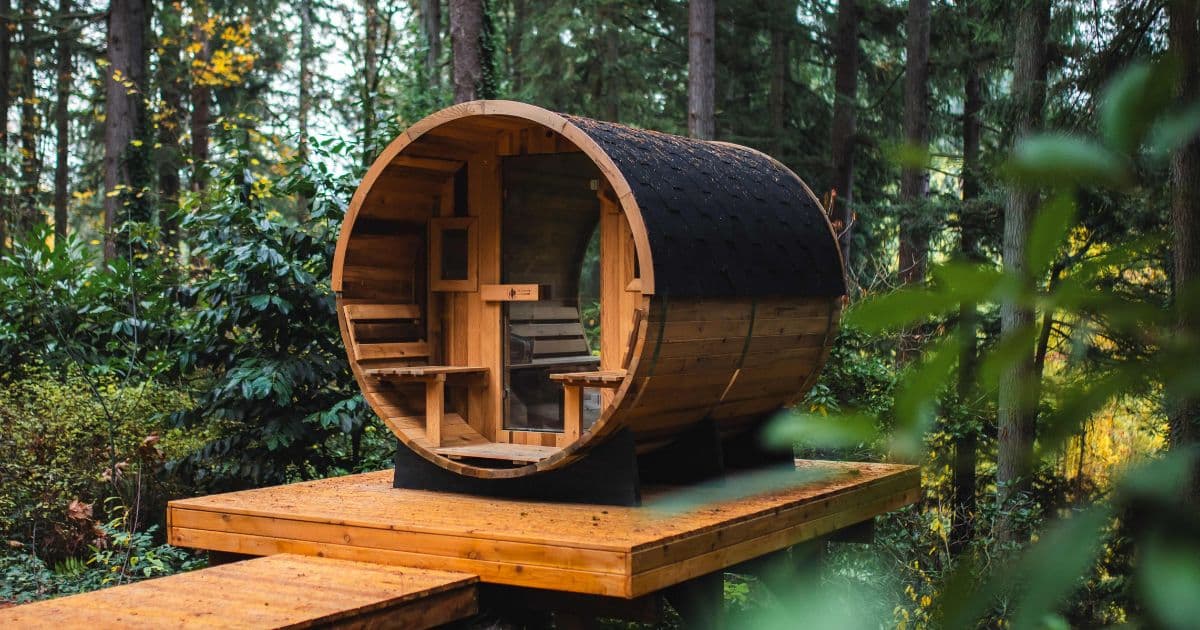
You can build a spa at home. Redwood Outdoors makes barrel and cabin saunas in cedar and thermowood construction. Polar Monkey makes cold plunges with configurable chillers. Combination packages exist. If the budget and the space allow, this removes friction, and friction is the main thing that decides whether a practice survives the third week.
You do not need any of that. The practice is older than the equipment.
- A cold shower at the end of a hot one. Thirty seconds, then sixty, then ninety. Costs nothing.
- The ocean, a lake, a river. Free, seasonal in some places, year-round in others. Build slowly. Never alone for serious cold.
- Hot yoga and a cold shower after. A workable contrast pairing if a sauna is not nearby.
- A public banya, Korean spa, or Russian bathhouse. Most metro areas have one. Often the best contrast experience for the price.
- An outdoor sauna at a lake. Cold-climate cities still run them, often on a community membership.
The point is the practice, not the platform. Soul Syndicate links to Redwood Outdoors and Polar Monkey from the contrast therapy setup guide and earns affiliate revenue on confirmed purchases. We are not selling them. They are tools that work, alongside everything above that does not require buying anything.

Between two states
The body's training is also the mind's. Autonomic flexibility, what physiology calls the trained capacity to move between sympathetic and parasympathetic states, is what feels like emotional range when it shows up in a life.
Stuck in heat is hedonism, comfort-seeking, avoidance of what is hard. Stuck in cold is depression, withdrawal, freezing. Most lives are not stuck at the extremes. They are stuck in a narrow middle, the temperate band where neither real joy nor real grief gets through clearly. The contrast practice is partly an argument that the band is wider than you think, and the body knows the path between.
This is not new. Frankl wrote that the prisoners who endured were the ones who could meet the worst conditions and still find something to hold. Pema Chödrön writes about keeping a soft heart that does not need to harden against difficulty. George Bonanno's decades of resilience research find the same thing in less spiritual language: the capacity to be moved by hard things, recover, and not flatten in the meantime is what predicts long-arc flourishing.
The cold teaches this faster than therapy does in some ways because the body cannot fake it. Either the breath catches and you ride it through, or it does not. Either way, the next moment is information.
The Tuesday version
Small, repeatable. None of these require equipment.
- Finish your next shower with thirty seconds of cold. Note what happens to mood that morning.
- Find one local sauna or banya. Go alone, no phone. Stay for one full cycle.
- If you live near open water and feel ready, walk in to your knees. Stand still for sixty seconds. Walk out. That is the first day of a year-long practice.
- Read Swimming to Antarctica if you need the patience modeled.
Do not start with the dramatic version. The dramatic version is the visible one percent of a long, quiet ninety-nine percent.
The closing frame
What contrast teaches is not how to endure. It is how to move between states without getting stuck. The practice is older than the equipment. The equipment is older than the marketing. The marketing is the newest part.
Snow on cedar. Steam off the tub. The cold finish on an ordinary morning. The vocabulary the body learns moves outward into the rest of a life.
Wellness research, mental health insights, and the ideas behind the practice, straight to your inbox.
Further reading
- Swimming to Antarctica, Lynne Cox (2004).
- Laukkanen et al., “Association Between Sauna Bathing and Fatal Cardiovascular and All-Cause Mortality Events,” JAMA Internal Medicine (2015).
- Søberg et al., “Altered brown fat thermoregulation and enhanced cold-induced thermogenesis in young, healthy, winter-swimming men,” Cell Reports Medicine (2021).
- George Bonanno, The End of Trauma: How the New Science of Resilience Is Changing How We Think About PTSD (2021).
- Pema Chödrön, When Things Fall Apart (1997), for the soft-heart framing in less clinical language.
Editorial, not medical advice. Cold immersion has real contraindications, including untreated cardiovascular disease, uncontrolled hypertension, and pregnancy. Build slowly, never alone for serious cold, and check with your physician before starting if any of the above applies. Affiliate disclosure: Soul Syndicate earns commission on confirmed Redwood Outdoors and Polar Monkey purchases routed through our resources page.
Building a setup at home? The companion guide weighs five honest options across sauna, wood-fired tub, and cold plunge.
For the dimension this work belongs to, the Physical hub holds the rest of the practice.
Physical Hub →